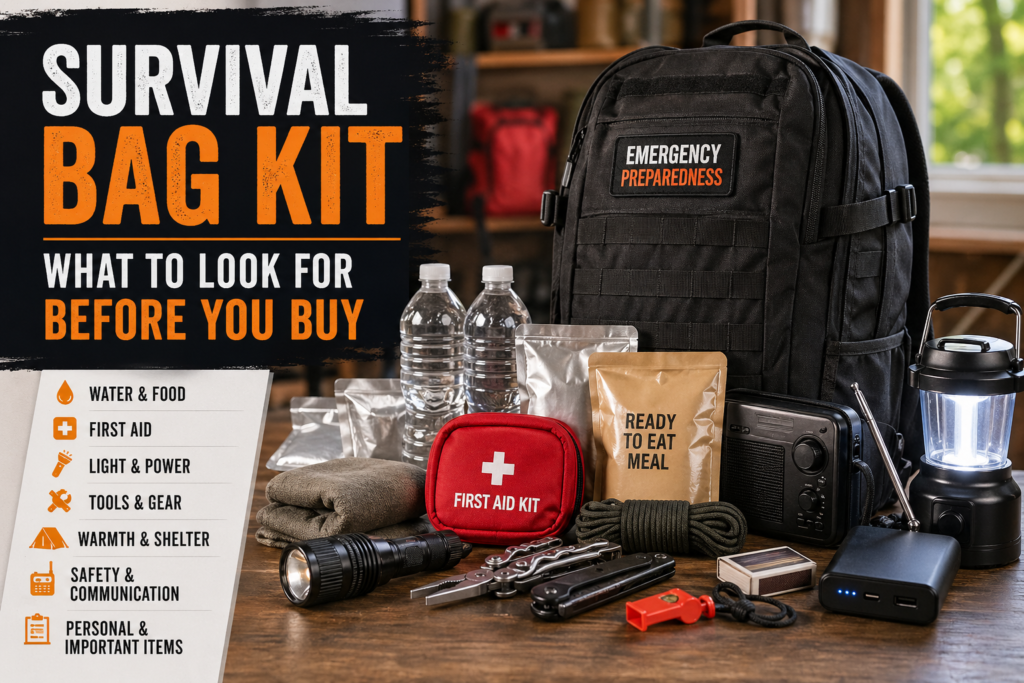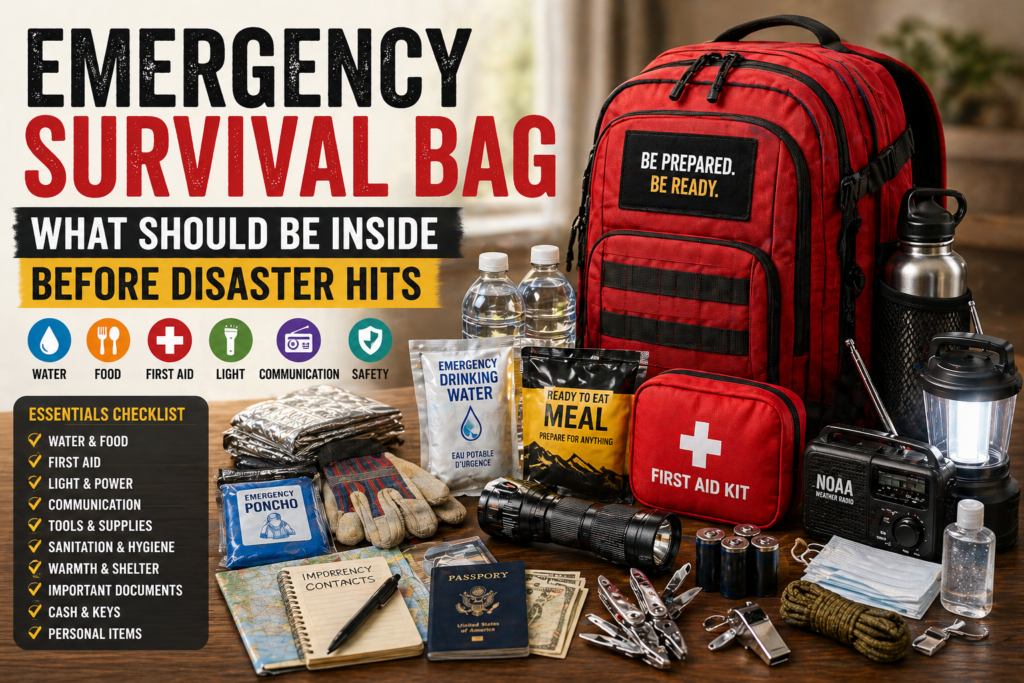
A survival gear backpack is different from a regular backpack. A regular backpack may carry books, clothes, a laptop, or travel items. A survival gear backpack is meant to keep important emergency supplies together in one place so you can grab it quickly during a power outage, storm, evacuation, roadside emergency, earthquake, flood, wildfire, or other unexpected situation.
The goal is not to pack every possible survival item you can find. That can make the bag too heavy and hard to carry. The real goal is to choose a backpack that can hold the most useful supplies for your situation without becoming disorganized, overloaded, or uncomfortable.
A good survival gear backpack should help with basic needs first: water, food, first aid, light, communication, warmth, sanitation, tools, and personal items. Ready.gov recommends emergency kits include supplies such as water, non-perishable food, a flashlight, radio, extra batteries, first aid kit, whistle, dust mask, sanitation items, manual can opener, maps, and phone charging supplies. (Ready.gov)
Disclosure: This article may contain affiliate links. If you buy through links on this page, Backpack Barn may earn a commission at no extra cost to you. Always review product details, kit contents, expiration dates, and suitability for your household before relying on any backpack or emergency kit.
What Is a Survival Gear Backpack?
A survival gear backpack is a backpack packed with emergency supplies that may help you manage short-term disruptions. You may also see similar bags called emergency backpacks, bug out bags, go bags, evacuation backpacks, survival backpacks, or 72-hour emergency backpacks.
The backpack itself matters because the supplies are only useful if you can carry them. A survival backpack should be strong enough to hold emergency gear, organized enough so you can find what you need, and comfortable enough to move with if you must leave home quickly.
Some people build their own survival gear backpack from scratch. Others buy a premade survival bag kit and add personal items later. Both approaches can work. The important thing is knowing what the backpack should carry and what to check before buying one.
Survival Gear Backpack vs Survival Bag Kit
A survival gear backpack and a survival bag kit are closely related, but they are not always the same thing.
A survival bag kit usually refers to a ready-made emergency kit that already includes supplies. It may come with food, water, first aid, emergency blankets, tools, lights, and other basic items.
A survival gear backpack focuses more on the bag and the gear you choose to pack inside it. You may buy an empty tactical backpack and build it yourself, or you may buy a stocked backpack that already includes survival supplies.
For shoppers, this difference matters. If you want convenience, a premade kit may be easier. If you want more control, you may prefer choosing your own backpack and supplies. If you want the best of both, start with a stocked backpack and then customize it for your home, vehicle, climate, and family needs.
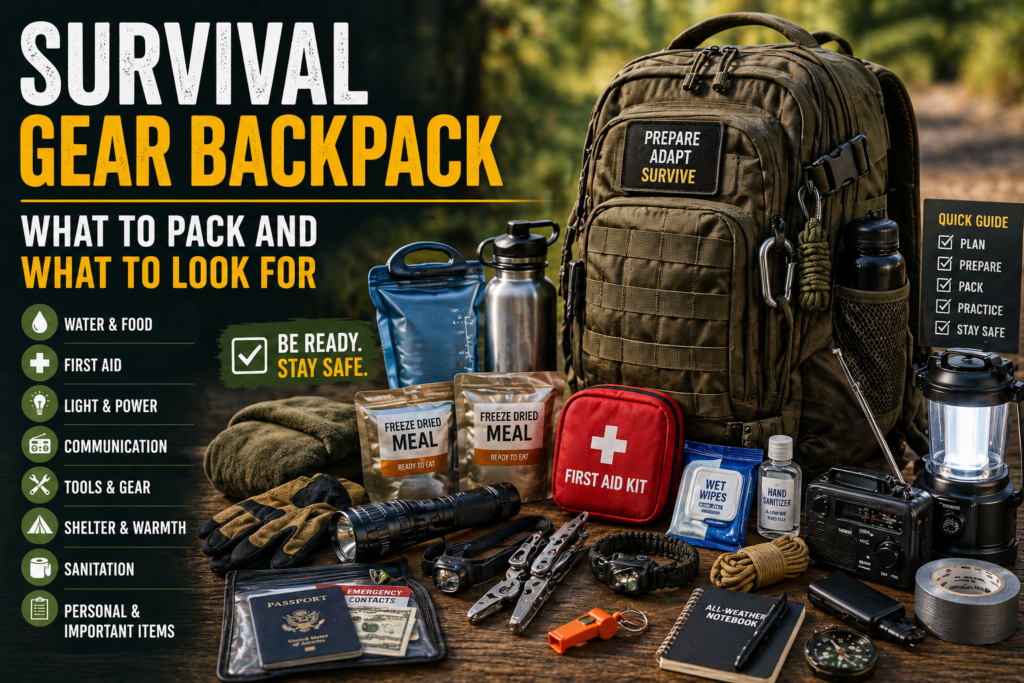
What to Pack in a Survival Gear Backpack
A survival gear backpack should start with the basics. Do not begin with fancy gadgets. Begin with the supplies most likely to help during a real emergency.
Water and Hydration Supplies
Water should be one of the first things you think about. The American Red Cross recommends one gallon of water per person per day, with a three-day supply for evacuation and a two-week supply for home preparedness. (redcross.org)
A backpack may not realistically carry several gallons of water, especially if it needs to stay portable. That is why many people combine packed emergency water with separate home water storage. Your backpack may include emergency water pouches, a collapsible water container, water purification tablets, or a compact filter.
When comparing a survival gear backpack, check whether it includes water at all. Some backpacks include pouches. Others include only a bottle or hydration bladder. Some include no water and expect you to add your own.
Emergency Food
Food in a survival backpack should be compact, shelf-stable, and easy to eat. Common options include emergency food bars, meal pouches, ready-to-eat meals, protein bars, peanut butter packets, dried fruit, or other non-perishable foods.
Do not judge the food by the number of pieces alone. Look at calories, serving size, expiration dates, and how many people the food is supposed to support. A kit that sounds large may still have limited food if it is meant for several people.
Food should also be realistic. If you have children, seniors, allergies, diabetes concerns, dietary restrictions, or picky eaters in your household, a premade food pack may not be enough. Add items that fit the real people who may depend on the bag.
First Aid Supplies
A basic first aid kit is one of the most important parts of a survival gear backpack. It may include bandages, gauze, antiseptic wipes, gloves, medical tape, scissors, tweezers, wound care supplies, and pain relief items.
However, most premade survival backpacks do not include personal medical needs. Add your own medications, copies of prescriptions, spare glasses, hearing aid batteries, inhalers, glucose supplies, or other personal health items if needed.
Also check whether the first aid kit is packed in a small pouch or loose inside the backpack. A separate first aid pouch is easier to find quickly.
Light and Power
Power outages are one of the most common reasons people reach for an emergency bag. A survival gear backpack should include some kind of flashlight, headlamp, lantern, glow stick, or compact emergency light.
Extra batteries matter. A flashlight without working batteries is dead weight. Some backpacks include crank-powered flashlights or radios, which can be useful when batteries are limited.
A power bank is also worth considering. It can help keep a phone charged long enough to contact family, check alerts, or use maps. Just remember to recharge the power bank every few months.
Radio and Communication
A battery-powered or hand-crank radio can help you receive alerts when internet or cell service is unreliable. Ready.gov includes a battery-powered or hand-crank radio, preferably a NOAA Weather Radio with tone alert, on its emergency supply list. (Ready.gov)
A whistle is also a small but useful item. It can help signal for attention if you are trapped, injured, or separated from others. Some kits include one, but if yours does not, it is easy to add.
You may also want a written emergency contact card. Phones can die, get lost, or become damaged. A small waterproof card with important phone numbers, addresses, medication notes, and meeting locations can be very helpful.
Warmth and Shelter
A survival gear backpack should include items that help protect you from cold, wind, rain, or exposure. Common items include emergency blankets, ponchos, gloves, hand warmers, tarps, small shelter items, and extra socks.
Even in warmer areas, rain and wind can make conditions uncomfortable fast. If you may need to evacuate, wait outdoors, sleep in a car, or walk during bad weather, warmth and shelter items matter.
Do not overlook clothing. A compact change of socks, a hat, and lightweight layers can make a backpack more useful, especially during storms or cold weather.
Tools and Gear
Tools can be helpful, but this is where many people overpack. You do not need to turn your backpack into a hardware store. Start with practical items.
Useful survival backpack tools may include a multi-tool, manual can opener, work gloves, duct tape, paracord, small knife where legal, waterproof matches, lighter, emergency whistle, small sewing kit, and basic repair items.
The key is usefulness. A tool should solve a real problem. If it is heavy, fragile, hard to use, or unlikely to be needed, it may not belong in the backpack.
Sanitation and Personal Hygiene
Sanitation items are easy to forget until you need them. A practical survival gear backpack may include wet wipes, hand sanitizer, tissues, toilet paper, feminine hygiene products, waste bags, soap sheets, masks, and disposable gloves.
These items do not sound exciting, but they can make a difficult situation more manageable. The Red Cross includes sanitation and personal hygiene items among recommended emergency supplies. (redcross.org)
For families, pack hygiene items for each person. For pets, add waste bags, food, medication, and a collapsible water bowl.
Personal and Important Items
A survival gear backpack should include items that are specific to your life. This is where many premade kits fall short.
Consider adding copies of IDs, insurance cards, emergency contacts, local maps, cash, extra car keys, spare glasses, medication list, pet information, copies of important documents, and a small notebook with pen.
For wildfire evacuation planning, Ready for Wildfire recommends including items such as prescriptions, extra eyeglasses or contact lenses, cash, extra car keys, important documents, pet food and water, and a map with at least two evacuation routes. (Ready for Wildfire)
What to Look for in the Backpack Itself
The backpack should be more than a container. It is the thing that carries everything else, so quality matters.
Look for strong stitching, durable zippers, padded shoulder straps, enough compartments, water-resistant material, and a size that fits the person carrying it. A backpack that is too large may encourage overpacking. A backpack that is too small may not hold enough useful supplies.
Organization is also important. If every item is dumped into one big compartment, you may waste time digging for a flashlight, first aid pouch, or water packet. A survival gear backpack should make important items easy to find.
Comfort matters more than people realize. In a real emergency, you may be tired, stressed, or moving quickly. A backpack with padded straps, a chest strap, waist support, or balanced compartments can be easier to carry than a cheap bag stuffed with gear.
Premade Survival Gear Backpack or DIY?
A premade survival gear backpack is helpful if you want a fast starting point. It may include food, water, first aid, lights, tools, emergency blankets, and other essentials already packed. This saves time and can be useful if you have been putting off emergency preparation.
The downside is that premade kits are not personal. They may not include your medications, documents, clothing, cash, pet supplies, prescription glasses, phone charger type, or preferred food. You still need to open the bag and customize it.
A DIY survival gear backpack gives you full control. You can choose the exact backpack, supplies, brands, food, medical items, and tools. The downside is time. Many people start building a kit and never finish it.
The best approach for many households is simple: buy a good premade backpack kit, then add the personal items that make it fit your real life.
Survival Gear Backpack Options to Compare
If you want a ready-made option, these survival bag kit pages are worth comparing:
| Option | Best For | Type |
|---|---|---|
| Evacuation Bag Kit | Grab-and-go emergency prep | All-in-one emergency backpack |
| Essentials Complete Deluxe Survival Kit | Couples or small households | 2–4 person survival kit |
| Stealth Angel 72 Hour Family Emergency Kit | Family emergency planning | 72-hour family kit |
| Earthquake Kit 72 Hour Emergency Survival Kit | Earthquake and disaster prep | 72-hour emergency kit |
| Family Emergency Kit | Household preparedness | Family survival backpack |
| Denver Premium 72 Hour Survival Backpack | Portable bug out setup | 2-person 72-hour backpack |
| EVERLIT Complete 72 Hours Earthquake Bug Out Bag | Disaster preparedness | 72-hour bug out bag |
Always check the current product page before buying. Product contents, availability, packaging, and included supplies can change.
How Heavy Should a Survival Gear Backpack Be?
A survival gear backpack should be useful, but it also needs to be carryable. This is where many people go wrong. They pack so much gear that the backpack becomes too heavy to move comfortably.
The right weight depends on the person carrying it. A strong adult may handle more weight than a child, senior, or someone with back, knee, or shoulder problems. If the bag is for a family, consider splitting supplies into more than one backpack instead of forcing one person to carry everything.
A good rule is to pack essentials first, then test the bag. Put it on. Walk around the house. Carry it up and down stairs. If it feels miserable after five minutes, it will probably feel worse during an emergency.
Where Should You Keep a Survival Gear Backpack?
A survival gear backpack should be stored where you can reach it quickly. Good locations include a front closet, garage shelf, vehicle trunk, RV, cabin, office, dorm room, or near an exit.
For home use, do not bury it behind seasonal decorations or storage boxes. For car use, make sure heat-sensitive items are checked often because food, water, batteries, and medical items may be affected by temperature.
Families should also make sure everyone knows where the backpack is. A survival backpack is more useful when it is easy to find and easy to grab.
Common Mistakes to Avoid
The first mistake is buying a survival gear backpack and never opening it. You should know what is inside, what is missing, and what needs to be replaced later.
The second mistake is ignoring expiration dates. Emergency food, water packets, batteries, medications, and certain first aid items may not last forever.
The third mistake is buying based only on the number of pieces. A kit with many small items may look impressive but still be weak on water, food, first aid, or quality.
The fourth mistake is forgetting personal needs. A premade kit may not include medication, glasses, pet supplies, baby supplies, cash, phone cables, or documents.
The fifth mistake is overpacking. A survival gear backpack should help you move, not slow you down.
Final Thoughts
A survival gear backpack is one of the most practical emergency items you can own because it keeps important supplies together in a carryable bag. The best backpack is not always the biggest one or the one with the most pieces. It is the one that fits your situation, holds the right supplies, and can actually be carried when needed.
Start with the basics: water, food, first aid, light, communication, warmth, sanitation, tools, and personal items. Then decide whether you want to build your own backpack or start with a premade survival kit and customize it.
Before buying, look closely at the backpack quality, included supplies, number of people covered, emergency time frame, weight, organization, and what personal items you still need to add. A survival gear backpack should make you more prepared, not more overwhelmed.
FAQ: Frequently Asked Questions
What is a survival gear backpack?
A survival gear backpack is a backpack packed with emergency supplies that may help during a power outage, evacuation, storm, earthquake, flood, wildfire, or roadside emergency. It usually includes items such as water, food, first aid supplies, lighting, communication tools, warmth items, sanitation supplies, and basic survival gear.
What should I pack in a survival gear backpack?
A survival gear backpack should include water, non-perishable food, a first aid kit, flashlight, batteries, emergency radio, whistle, emergency blanket, poncho, gloves, sanitation items, phone charging option, and basic tools. You should also add personal items such as medication, cash, copies of documents, glasses, pet supplies, and emergency contact information.
Is a survival gear backpack the same as a bug out bag?
A survival gear backpack and a bug out bag are very similar, but the wording can vary. A bug out bag is usually designed for quick evacuation, while a survival gear backpack may also be used for home emergencies, car emergencies, camping backup, storms, power outages, or disaster preparedness.
Should I buy a premade survival backpack or build my own?
A premade survival backpack is helpful if you want the basics gathered quickly in one bag. Building your own gives you more control over the backpack, supplies, food, tools, and personal items. Many people start with a premade survival gear backpack and then customize it with medication, documents, cash, clothing, and household-specific supplies.
How heavy should a survival gear backpack be?
A survival gear backpack should be light enough for the intended person to carry safely. The right weight depends on age, strength, health, and the situation. If the backpack feels too heavy after walking around for a few minutes, it may be overloaded. Focus on essential supplies first, then remove items that add weight without clear value.
Where should I keep a survival gear backpack?
Keep a survival gear backpack somewhere easy to reach, such as near the front door, in a hall closet, garage, vehicle trunk, RV, office, or dorm room. The best location is one you can access quickly if you need to leave home, respond to a power outage, or handle an emergency.