An emergency survival bag is one of the most practical items you can keep ready before a crisis happens. When a power outage, storm warning, flood alert, wildfire evacuation, earthquake, or roadside emergency interrupts normal life, the last thing most people want to do is search the house for flashlights, batteries, water, medications, and important documents. An emergency survival bag helps solve that problem by keeping the basics together in one place.
The purpose of an emergency survival bag is not to prepare for every imaginable disaster. It is to help you handle the first phase of a real emergency with less confusion and more control. That usually means access to water, food, first aid, lighting, communication tools, warmth, hygiene supplies, and personal essentials that matter to your household.
A good emergency survival bag should be practical, portable, and easy to reach. It should also match your real-world needs. A bag for one adult may look very different from a bag for a family, a couple, or someone preparing for car travel, wildfire evacuation, hurricanes, or earthquakes.
Disclosure: This article may contain affiliate links. If you buy through links on this page, Backpack Barn may earn a commission at no extra cost to you. Always review the contents, expiration dates, and suitability of any survival bag before depending on it in an emergency.
What Is an Emergency Survival Bag?
An emergency survival bag is a backpack, duffel, or carry-ready bag filled with emergency supplies. You may also hear it called a go bag, bug out bag, emergency backpack, evacuation bag, disaster preparedness bag, or 72-hour survival bag.
The exact wording changes, but the purpose is usually the same. The bag should hold the key items you may need if you must leave quickly or if you need to get through a short-term disruption at home, in your car, or at another location. That could mean a weather emergency, utility failure, evacuation order, flood, civil unrest, or another urgent event.
What makes an emergency survival bag different from random emergency supplies is organization. Instead of storing flashlights in one drawer, batteries in another, food in a pantry corner, and documents somewhere else, you keep the essentials together so they are easier to grab when time matters.
Why an Emergency Survival Bag Matters
Many emergencies do not leave much time for preparation. A power outage may happen suddenly. Roads may close. Stores may sell out of water, batteries, and shelf-stable food within hours. Evacuation warnings may give families only a short window to act.
That is why an emergency survival bag matters. It helps reduce panic and wasted time. You are not starting from zero. You already have the foundation packed and ready.
It also helps you think ahead. Once you have a basic bag, you can adjust it for the people in your home. You can add medications, copies of documents, pet supplies, extra clothing, and anything else that fits your situation. That flexibility is what makes the emergency survival bag useful.
What Should Be Inside an Emergency Survival Bag?
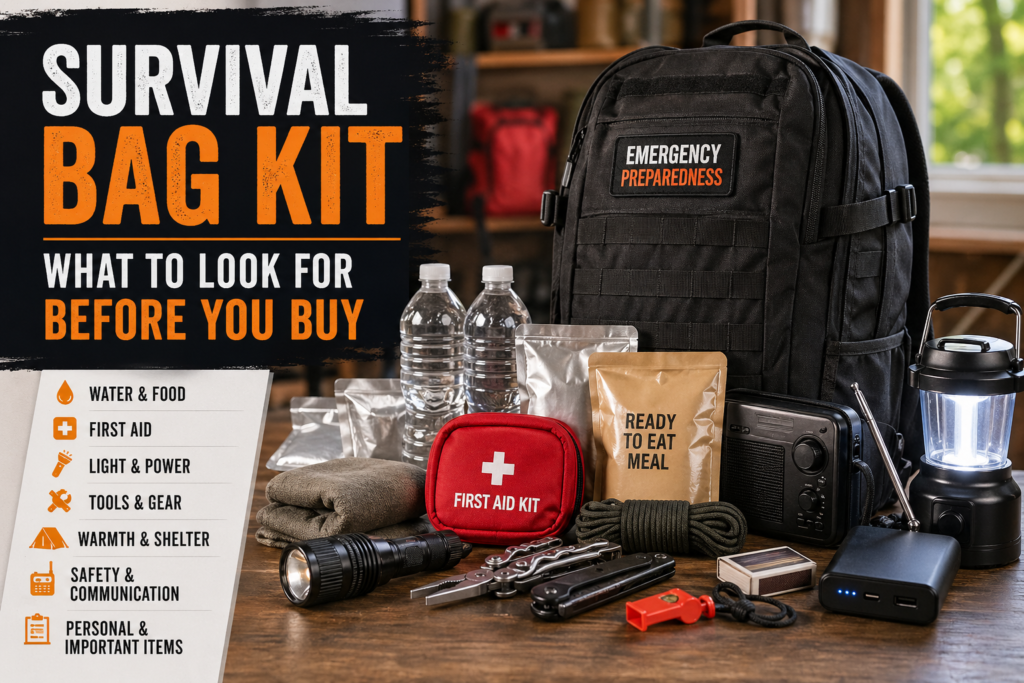
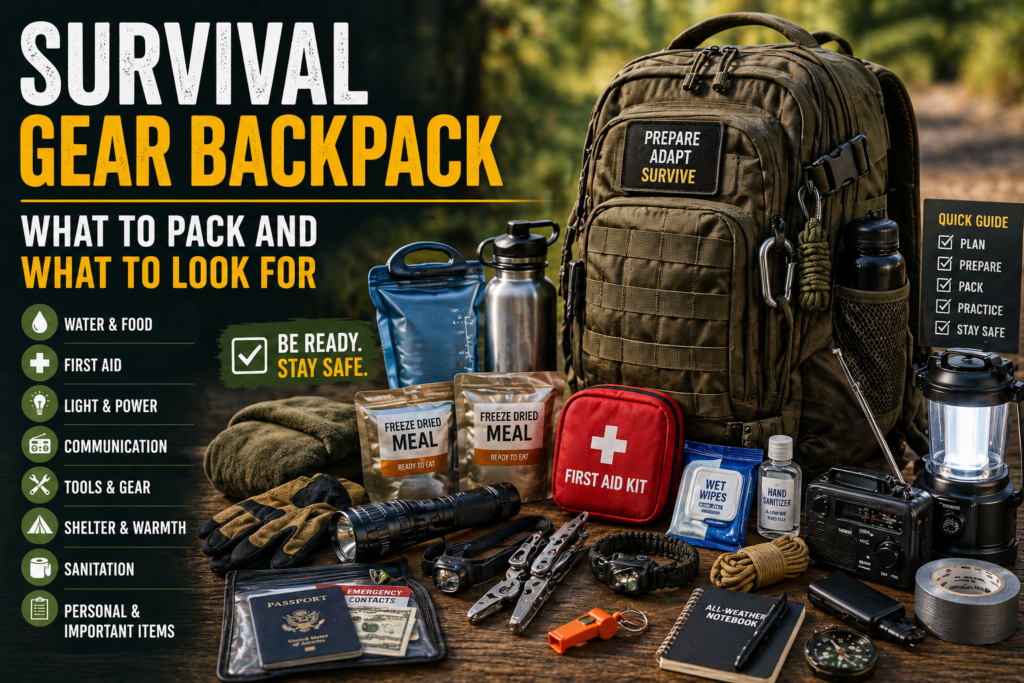
The best emergency survival bag starts with essentials, not gimmicks. Fancy survival tools may look impressive, but the basics matter more. Water, food, light, communication, first aid, warmth, sanitation, and personal items should come first.
Water and Hydration Supplies
Water is one of the most important things to plan for. Many emergencies disrupt access to clean drinking water very quickly. A survival bag may include emergency water pouches, small bottles, purification tablets, or a compact filter. Some bags include little or no water at all, so this is one of the first things to check.
A bag needs to stay portable, so it may not hold as much water as you ideally want for several days. That is normal. Many people keep some water in the emergency bag and store additional water separately at home or in the car. The important thing is to make sure your emergency survival bag includes at least some immediate hydration support.
Non-Perishable Food
Food in an emergency survival bag should be simple, compact, and shelf-stable. Common examples include emergency food bars, ready-to-eat meal pouches, dried food, protein bars, or calorie-dense snack items that last well in storage.
What matters most is not just how many pieces are included but how useful they are. Check the calories, shelf life, serving size, and whether the food matches the number of people you are preparing for. If you have children, seniors, allergies, diabetes concerns, or special dietary needs in your household, you may need to customize the food section yourself.
First Aid Supplies
A first aid kit is a core part of any emergency survival bag. It should include basics such as bandages, gauze, antiseptic wipes, tape, gloves, and simple wound-care items. Some premade kits also include scissors, tweezers, pain relief items, or other minor care supplies.
What a first aid kit usually does not include is your personal medical life. Prescription medication, inhalers, glucose supplies, hearing aid batteries, spare glasses, and copies of prescriptions are all household-specific items you may need to add yourself. This is one reason why even a good premade emergency survival bag still needs to be opened and customized.
Flashlight, Lantern, and Power
A light source belongs in every emergency survival bag. Power outages are common, and emergencies do not always happen during daylight hours. A flashlight is often the first item people look for when things go wrong.
A good bag may also include extra batteries, a lantern, a headlamp, or a small crank-powered light. A power bank is also smart to include, since phones often become essential during emergencies. You may need to call someone, check weather alerts, use navigation, or access emergency messages.
Radio and Communication Tools
A battery-powered or hand-crank radio is worth having in an emergency survival bag, especially if weather is part of the risk. A radio can help when internet service is weak, power is out, or phone batteries are limited. A whistle is another small but useful item that many people overlook. It takes up very little space and can help you signal for attention if needed.
Some people also keep an emergency contact card in the bag. This can be helpful if a phone dies or gets damaged. Important phone numbers, addresses, medical notes, and meeting-point details can be worth carrying in paper form.
Warmth, Shelter, and Clothing
Warmth and basic shelter items matter more than many people expect. If you need to leave home, wait outside, sleep in a vehicle, or shelter in a cold location, the difference between comfort and misery can come down to a few simple items.
Emergency blankets, ponchos, gloves, hand warmers, a compact tarp, and extra socks are all common additions. Even in warmer areas, wind, rain, and exposure can make a bad situation harder. Clothing layers, a hat, and dry socks may sound basic, but they can make a survival bag much more useful.
Tools and Basic Survival Gear
This is the part where many people go overboard. An emergency survival bag should include useful tools, not every survival gadget on the internet. A multi-tool, lighter, waterproof matches, paracord, duct tape, work gloves, manual can opener, and a small knife where legal are reasonable choices.
The key is usefulness. Every item in the bag should earn its place. If it is bulky, fragile, hard to use, or unlikely to help in your real-world emergencies, it may not need to be there. Focus on simple, dependable tools that solve real problems.
Sanitation and Hygiene Items
Sanitation is one of the most overlooked parts of emergency prep. A bag becomes much more practical when it includes wet wipes, tissues, toilet paper, hand sanitizer, soap sheets, feminine hygiene items, disposable gloves, and waste bags.
These items are not the most exciting part of a survival bag, but they can be some of the most appreciated. If you are sheltering in place, traveling, stuck in traffic during an evacuation, or caring for children, sanitation items quickly become important.
Personal Documents and Important Items
This is where an emergency survival bag becomes personal. Premade kits rarely cover the parts of emergency prep that are specific to your household. That means you should consider adding copies of IDs, insurance cards, emergency contact information, local maps, cash, spare keys, medication lists, pet information, and other small but important items.
If you have pets, add pet food, medication, and a collapsible water bowl. If you have young children, add comfort items, wipes, diapers, or anything else needed for them. If you live in a region where evacuation is a real risk, copies of important papers and some emergency cash can be very helpful.
Premade Emergency Survival Bag vs Building Your Own
Many people ask whether it is better to buy a premade emergency survival bag or build one from scratch. The honest answer is that both options can work.
A premade bag saves time. It gives you a quick starting point and may already include food, water, first aid items, lights, blankets, and small tools. That can be helpful for people who want to get prepared without shopping for every piece separately.
Building your own gives you more control. You can choose the exact backpack, brands, supplies, food, tools, and layout that fit your needs. The downside is that it takes more time and effort, and many people put it off for too long.
For most households, the best path is often a hybrid one. Start with a premade emergency survival bag, then add the personal items your family would really need.
Emergency Survival Bag Options to Compare
If you want a ready-made option, these pages on your site fit this topic well:
| Emergency Survival Bag Option | Best For | Type |
|---|---|---|
| Evacuation Bag Kit | Fast grab-and-go preparedness | All-in-one emergency go bag |
| Essentials Complete Deluxe Survival Kit | Couples and small households | 2–4 person survival kit |
| Stealth Angel 72 Hour Family Emergency Kit | Family preparedness | 72-hour family emergency kit |
| Earthquake Kit 72 Hour Emergency Survival Kit | Earthquake and disaster prep | 72-hour emergency survival kit |
| Family Emergency Kit | Household coverage | Family emergency backpack |
| Denver Premium 72 Hour Survival Backpack | Portable bug-out style setup | 72-hour survival backpack |
| EVERLIT Complete 72 Hours Earthquake Bug Out Bag | Disaster-focused preparedness | 72-hour bug out bag |
These options work well as comparison points for readers who want a stocked bag rather than building one from the ground up.
Where Should You Keep an Emergency Survival Bag?
The best emergency survival bag is the one you can reach quickly. Good storage spots include a hall closet, near the front door, in the garage, in a vehicle trunk, in an RV, or somewhere else that makes sense for fast access.
Avoid burying it behind storage bins, holiday decorations, or hard-to-reach shelves. If the bag is for evacuation, it should be close enough to grab without searching. If it is stored in a vehicle, remember to check it more often because heat and cold can affect food, water, batteries, and medical items.
Common Mistakes to Avoid
One common mistake is buying a bag and never checking what is inside. You should know what you have, what is missing, and what needs to be added or replaced.
Another mistake is focusing too much on the number of included items. A kit can list many pieces and still be weak on food, water, first aid, or quality. More pieces do not always mean better preparedness.
Another big mistake is forgetting personal needs. A premade bag may look complete, but it does not know your medications, your documents, your pets, your children, or your phone charger type.
Finally, avoid overpacking. An emergency survival bag should be useful and portable. If it becomes too heavy to carry comfortably, it may not help as much as you think.
Final Thoughts
An emergency survival bag is one of the smartest ways to prepare for the unexpected because it brings your key supplies together in one place. The best bag is not always the most tactical-looking one or the one with the longest item list. It is the one that matches your real needs, includes the basics, and can actually be used when the situation is stressful.
Start with water, food, first aid, light, communication, warmth, sanitation, and personal items. Then decide whether you want to build your own setup or start with a premade emergency survival bag and customize it.
Before disaster hits, the best time to think through these details is now. Once an emergency begins, preparation becomes harder. A ready emergency survival bag can make that first stretch of uncertainty far more manageable.
FAQ: Frequently Asked Questions
What is an emergency survival bag?
An emergency survival bag is a backpack, duffel, or carry-ready bag filled with supplies that may help during a power outage, storm, evacuation, flood, wildfire, earthquake, or roadside emergency. It usually includes essentials such as water, food, first aid, lighting, communication tools, warmth items, hygiene supplies, and personal documents.
What should be inside an emergency survival bag?
An emergency survival bag should include water, shelf-stable food, a first aid kit, flashlight, extra batteries, emergency radio, whistle, emergency blanket, poncho, sanitation items, power bank, phone charging cable, basic tools, cash, copies of documents, and any personal medication or household-specific supplies.
Is an emergency survival bag the same as a bug out bag?
They are very similar, but the purpose can be slightly different. A bug out bag is usually focused on quick evacuation, while an emergency survival bag can also be used for home emergencies, storms, car trouble, power outages, or short-term disaster preparedness.
Should I buy a premade emergency survival bag or build my own?
A premade emergency survival bag is helpful if you want the basic supplies gathered quickly. Building your own gives you more control over the backpack, food, tools, first aid supplies, and personal items. Many people start with a premade bag and then add medication, documents, cash, phone chargers, clothing, pet supplies, and other household needs.
Where should I keep an emergency survival bag?
Keep an emergency survival bag somewhere easy to reach, such as near the front door, in a hall closet, garage, vehicle trunk, RV, office, or dorm room. The best location is one you can access quickly during an evacuation, power outage, storm, or other urgent situation.
How often should I check my emergency survival bag?
Check your emergency survival bag at least a few times per year. Look at food and water expiration dates, battery charge, flashlight function, medication dates, weather-related items, clothing sizes, and whether your documents, phone cables, and personal supplies still match your needs.